

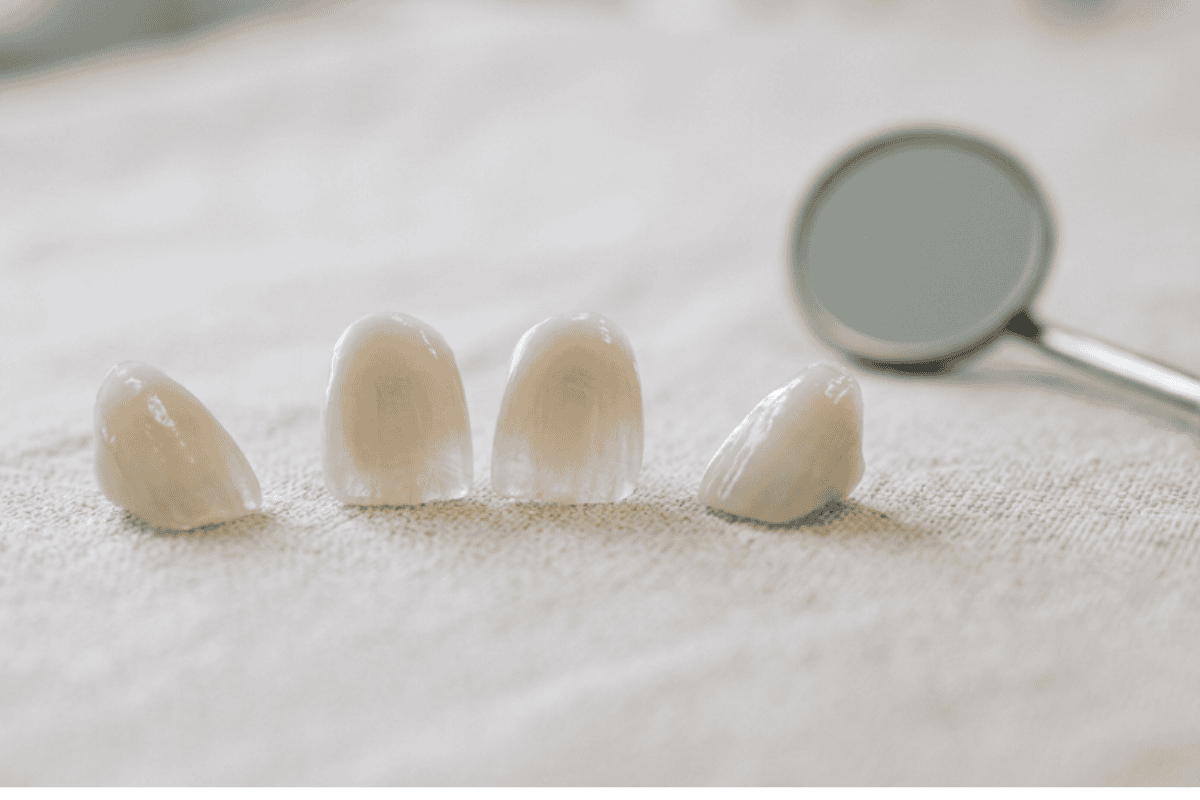
16 Aug How Long Do Porcelain Veneers Usually Last in Olathe, KS?
On Lone Elm Road in Olathe, KS, patients considering veneers usually ask the same question before anything else: will this actually hold up? How long do porcelain veneers usually last is a fair thing to want settled before committing to a treatment that permanently changes the front surface of your teeth, and the honest range most dentists quote is 10 to 15 years, with some veneers lasting 20 years or longer under the right conditions. That range is not a marketing number. A long term clinical study following feldspathic porcelain veneers found a 96 percent survival rate after 21 years when the veneers were properly bonded to enamel, which is about as strong a track record as any cosmetic dental treatment can claim. Knowing what actually drives that lifespan up or down is what turns veneers from a leap of faith into a predictable investment.
How Long Do Porcelain Veneers Usually Last, Realistically?
The 10 to 15 year range is the number most cosmetic dentists give as a realistic average, and it holds up well against the research. That same long term study, tracking veneers placed by a single prosthodontist over two decades, reported a cumulative survival rate of 95.7 percent at five years, a figure that stayed remarkably high even a decade or more out. Porcelain earns that durability because of how it is made and bonded. Cleveland Clinic explains that porcelain veneers are custom fabricated in a dental lab and bonded directly to the enamel of your natural teeth, which creates a strong mechanical and chemical bond that resists everyday wear far better than materials placed freehand in the mouth. Composite resin veneers, by comparison, typically last only 5 to 7 years, since the material is softer and more prone to staining and chipping over time.
What Actually Shortens the Life of Porcelain Veneers
Veneers do not fail on a fixed schedule, they fail when specific stress is applied to them repeatedly, and most of that stress is preventable. Grinding or clenching your teeth at night puts constant pressure on the thin porcelain edges, which is the single most common reason veneers chip or crack early. Using your teeth as tools, biting into ice, or chewing on pens creates the same kind of sudden force veneers were never designed to absorb. Gum recession over the years can also expose the edge of a veneer at the gumline, creating a visible line that no amount of polishing corrects. The ADA is direct about the tradeoff involved: veneers are not reversible, since a thin layer of enamel is removed to place them, and the ADA warns that a veneer may chip, crack, wear down, or loosen over time, which is exactly why protecting them from unnecessary force matters so much.
Porcelain vs. Composite Veneers: Lifespan Compared
The table below lays out how the two most common veneer materials compare on the numbers that actually affect your decision.
| Factor | Porcelain Veneers | Composite Veneers |
|---|---|---|
| Typical lifespan | 10 to 15 years, sometimes 20 or more | 5 to 7 years |
| Stain resistance | High, porcelain resists staining well | Lower, more prone to discoloration |
| Fabrication | Custom made in a dental lab | Sculpted directly onto the tooth |
| Repairability | Usually requires full replacement if damaged | Can often be touched up or repaired chairside |
| 10 year survival rate | Approximately 95 percent in clinical studies | Lower, with more frequent touch ups needed |
Protecting Your Investment Once Veneers Are Placed
Veneers are permanent in the sense that the enamel underneath them is permanently altered, but the veneers themselves are a maintained restoration, not a one time purchase you can ignore afterward. A nightguard is the single most effective step for anyone who grinds their teeth, since it absorbs the pressure that would otherwise land directly on the porcelain edges. Brushing with a soft bristle brush and non abrasive toothpaste protects both the veneer surface and the gumline underneath it, and flossing daily keeps decay from starting at the margin where the veneer meets your natural tooth. Twice yearly dental visits let your dentist catch a hairline crack or a loosening edge long before it becomes a visible problem, which is often the difference between a simple repair and a full replacement. Avoiding hard foods like ice and un popped popcorn kernels removes one of the most common causes of a chipped veneer in otherwise well maintained smiles.
Why Choose Your Olathe Dentist
Veneer longevity is decided before the porcelain ever gets bonded, in how carefully the case is planned, so we start every veneer consultation with an honest look at your bite, your grinding history, and the health of the teeth being covered, not just the shade you want. If decay, gum recession, or a misaligned bite is part of the picture, we address that first at our Lone Elm Road office rather than bonding veneers over an unresolved problem, because doing it in that order is what actually protects the 10 to 15 year timeline. We also handle the follow up care, from nightguards to the twice yearly checks that catch small issues early, under the same roof where the veneers were placed, so nothing about your maintenance gets lost between offices. For patients in Olathe, KS who are investing in a permanent cosmetic change, that planning and follow through is what separates veneers that last two decades from veneers that need replacing in five.
Conclusion
The rule of thumb worth keeping is simple: porcelain veneers reliably last 10 to 15 years, and the biggest variable in whether yours land at the low end or stretch past 20 is not the material, it is what you do to protect them afterward, especially managing nighttime grinding and avoiding hard bites. Budget for a nightguard if you clench your teeth, keep up with regular cleanings, and treat a chipped edge as something to fix immediately rather than something to live with. Veneers are one of the more durable cosmetic investments available, and patients across Olathe, KS who follow that maintenance routine consistently get the long end of that range rather than the short one, so call our team to find out if your smile is a good candidate.
Curious What Veneers Could Do for Your Smile? Request your appointment and we will walk you through the planning process.
Frequently Asked Questions
How long do porcelain veneers usually last?
Porcelain veneers typically last 10 to 15 years, and some last 20 years or longer with good care. A long term clinical study found a 96 percent survival rate at 21 years for properly bonded feldspathic porcelain veneers. The actual lifespan depends heavily on oral hygiene, bite habits, and whether the patient grinds their teeth.
Do porcelain veneers need to be replaced eventually?
Yes, veneers are not considered a permanent, one time restoration and most patients replace them at some point, typically after 10 to 15 years. Replacement becomes necessary when a veneer chips, the bond weakens, or the color no longer matches surrounding teeth that have naturally shifted in shade. Regular dental visits help catch these issues before they become urgent.
Can porcelain veneers stain over time?
Porcelain is highly resistant to staining compared to natural enamel or composite resin, so veneers generally keep their color well for years. Staining is more likely to show up along the bonded edge where the veneer meets the natural tooth, rather than on the porcelain surface itself. Avoiding tobacco and limiting heavily pigmented foods and drinks helps preserve the original shade longer.
What causes porcelain veneers to fail early?
Teeth grinding and clenching are the most common causes of early veneer failure, since the constant pressure can chip or crack the porcelain. Using teeth to bite into hard objects, poor oral hygiene leading to decay at the margins, and gum recession that exposes the veneer edge also shorten the lifespan. Most of these causes are preventable with a nightguard and consistent dental care.
Is it worth getting porcelain veneers?
Whether veneers are worth it depends on your goals, your bite, and your willingness to maintain them, but the data supports them as a durable option when properly cared for. With a 10 to 15 year average lifespan and strong long term survival data, veneers offer one of the more predictable returns among cosmetic dental treatments. A consultation with a dentist is the best way to know if your specific teeth and habits make you a good candidate.

Sorry, the comment form is closed at this time.