

08 Aug What Is a Dental Bridge and How Does It Work?
What Is a Dental Bridge and How Does It Work?
A three unit bridge, the standard setup used to replace a single missing tooth, typically runs between 1,500 and 5,000 dollars depending on the material and how many teeth are involved. That price tag makes more sense once you understand what is a dental bridge and how does it work, because the cost is really paying for two crowns and the lab work that connects them into one solid piece. A bridge fills the space left by a missing tooth using the healthy teeth on either side as anchors, and it has been one of the most dependable ways to close a gap in a smile for decades. For patients in Olathe, KS weighing their options after losing a tooth, knowing exactly how the pieces fit together makes the decision a lot less confusing.
What Is a Dental Bridge?
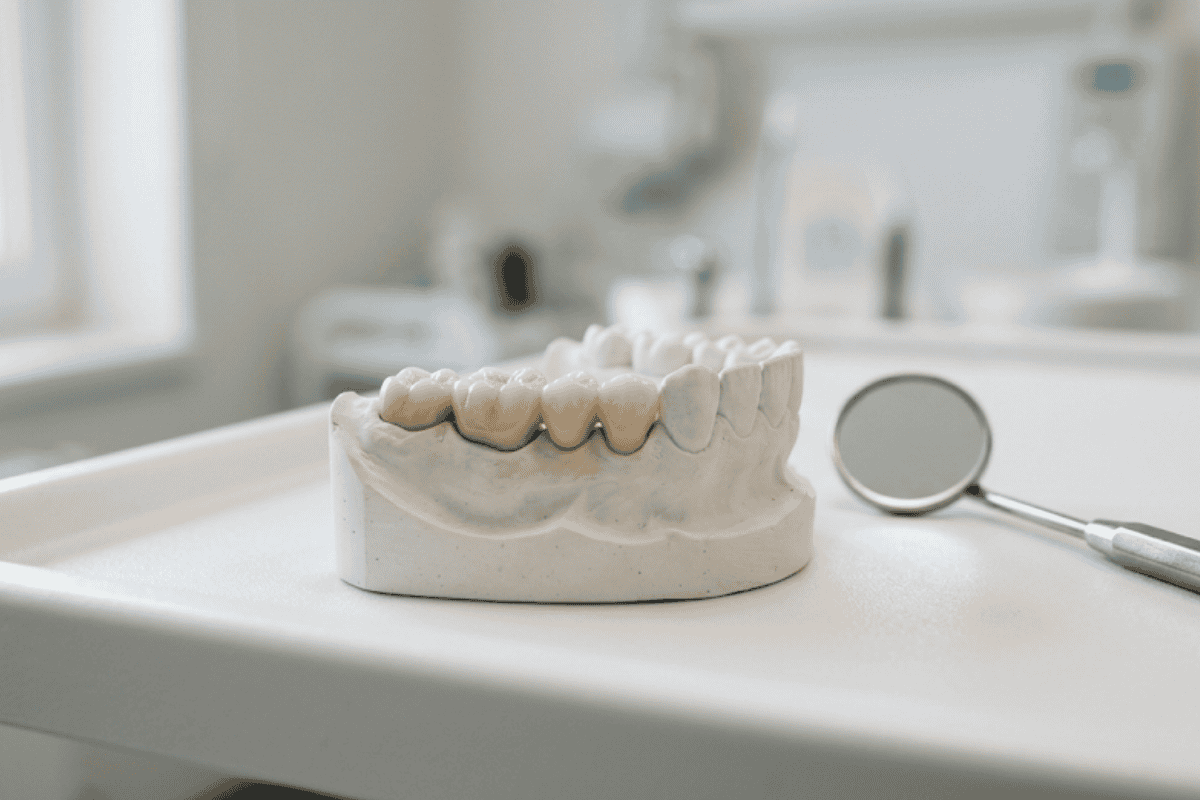
A dental bridge is a fixed restoration built to replace one or more missing teeth in a row. It is made up of two crowns, called abutments, that fit over the natural teeth on each side of the gap, connected by one or more artificial teeth in the middle called pontics. Unlike a denture, a bridge is cemented in place and is not removed for cleaning, which is part of why so many patients prefer it. The American Dental Association describes a bridge as a way to literally bridge the space where a tooth used to be, using the surrounding teeth for support. Bridges have traditionally replaced one to three teeth in a row, and in some cases up to four, though a longer span needs stronger anchor teeth to carry the added load.
How a Dental Bridge Works, Step by Step
The process starts with preparing the two anchor teeth. Your dentist reshapes them, removing a thin layer of enamel so a crown can fit over each one without feeling bulky. Next comes an impression or digital scan of your bite, which becomes the blueprint the dental lab uses to build a bridge that matches the size, shape, and color of your natural teeth. While the permanent piece is being made, most patients wear a temporary bridge so the prepared teeth stay protected and the smile does not have an obvious gap in the meantime. Cleveland Clinic notes that this whole process restores oral health, chewing function, and appearance once it is complete. When the permanent bridge is ready, your dentist checks the fit and bite carefully before cementing the crowns onto the abutment teeth, and the artificial tooth or teeth in between finally close the gap for good.
Why the Anchor Teeth Matter So Much
The entire structure depends on the strength of the teeth on either side of the gap, because they now carry the chewing force that the missing tooth used to handle. WebMD explains that these two or more crowns support a false tooth or teeth in between, and the whole assembly only works if the abutment teeth are healthy enough to bear that extra function. If a supporting tooth has a large filling, a crack, or gum disease, your dentist may need to treat that issue first, or consider an implant supported bridge instead, which anchors to the jawbone rather than to natural teeth. Delta Dental notes that an implant supported version requires two separate healing steps and generally costs more, but it does not rely on your existing teeth at all. Choosing between the two comes down to how many natural teeth remain nearby and how much support they can safely provide, which is exactly the kind of case a prosthodontist is trained to evaluate.
Dental Bridge Options Compared
The table below lines up the two most common bridge types side by side, along with the traditional numbers most patients ask about.
| Feature | Tooth Supported Bridge | Implant Supported Bridge |
|---|---|---|
| What anchors it | Crowns on natural teeth beside the gap | Titanium posts placed in the jawbone |
| Typical cost | About $1,500 to $5,000 for a 3 unit bridge | Generally higher, due to the implant surgery step |
| Treatment time | A few weeks, from prep to final cementation | Several months, to allow implant healing |
| Impact on nearby teeth | Requires reshaping two healthy anchor teeth | Does not require altering neighboring teeth |
| Typical lifespan | 10 years or longer with good care | 10 years or longer with good care |
Caring for a Bridge and How Long It Lasts
A bridge does not need to be removed for cleaning, but the space underneath the pontic needs deliberate attention because it is not shaped like a normal tooth gap. A floss threader or a water flosser helps clear food and plaque from beneath the false tooth, and your dentist may also recommend a specific interdental brush sized for that area. With consistent home care and regular cleanings, a bridge commonly lasts 10 years or longer, though the honest limiting factor is usually the health of the abutment teeth underneath the crowns rather than the bridge material itself. Watch for a bridge that feels loose, a change in your bite, or new sensitivity in an anchor tooth, since those signs mean it is time for an exam rather than something to wait out.
Why Choose Your Olathe Dentist
The success of a bridge lives or dies on how carefully the anchor teeth were prepared and how precisely the piece was fitted to your bite, so we treat that groundwork as the real work, not the finishing touch. Because we place crowns, treat root canals, and evaluate implant candidacy in the same Olathe office, we can tell you honestly whether a tooth supported bridges or an implant option fits your mouth better, instead of defaulting to whichever procedure we happen to offer. If an anchor tooth needs treatment first, that work happens on Lone Elm Road as part of one coordinated plan rather than a referral that adds months to your timeline. For patients across Olathe, KS who want a bridge that still fits comfortably in ten years, that attention to the supporting teeth, not just the visible restoration, is what protects your investment.
Conclusion
The single most useful thing to remember is this: a bridge is only as strong as the teeth holding it up, so the real decision is not which bridge looks best, it is whether your neighboring teeth are healthy enough to support one, or whether an implant supported option makes more sense for your mouth. Expect the process itself to take a few weeks from the first prep appointment to the final cementation, and expect a well cared for bridge to serve you for a decade or longer. If you have been putting off replacing a missing tooth in Olathe, KS, the gap will not close on its own, and nearby teeth tend to drift into the space the longer it sits empty, so call our team at and let us map out the right option for your bite.
Ready to Close the Gap? Schedule a Bridge Consultation in Olathe and we will find a time that works.
Frequently Asked Questions
What is a dental bridge made of?
Dental bridges can be made from porcelain, porcelain fused to metal, gold, alloys, or a combination of these materials. Porcelain is the most common choice today because it can be shaded and shaped to match your surrounding teeth closely. The material your dentist recommends depends on which teeth are being replaced and how much chewing force that area of your mouth handles.
How long does a dental bridge last?
Most dental bridges last 10 years or longer with consistent brushing, flossing under the pontic, and regular dental visits. The bridge material itself rarely fails first; the more common issue is decay or gum problems developing in the anchor teeth underneath the crowns. Keeping those supporting teeth healthy is the biggest factor in how long a bridge actually lasts.
Is getting a dental bridge painful?
The teeth being prepared for crowns are numbed with local anesthetic, so the reshaping and impression steps are not painful during the appointment. Some mild soreness or sensitivity in the days afterward is normal and typically fades quickly. Most patients describe the process as similar to getting a couple of crowns done at once.
Can you eat normally with a dental bridge?
Yes, a properly fitted bridge is designed to function like your natural teeth once it is fully cemented in place. Most dentists recommend easing into firmer or sticky foods over the first few days while you get used to the new bite. After that adjustment period, most patients eat without any restrictions.
What is the difference between a bridge and a partial denture?
A bridge is fixed in place and cemented to the surrounding teeth, so it cannot be removed for cleaning like a partial denture can. A partial denture is removable and clips onto remaining teeth using clasps, making it a less permanent and generally less expensive option. The right choice depends on how many teeth are missing, the health of nearby teeth, and personal preference for a fixed versus removable solution.

Sorry, the comment form is closed at this time.