

22 Jul What Is the Difference Between Full and Partial Dentures in Olathe, KS?
A full set of conventional dentures usually runs between $1,500 and $3,600 without insurance, while a partial that fills in just a few missing teeth can start closer to $1,300. That price gap hints at the real distinction, because the difference between full and partial dentures comes down to how many teeth you are replacing and what holds the appliance in place. Both are removable, both restore your ability to chew and speak clearly, and both are designed and fitted right here in Olathe, KS. Once you understand which option matches your situation, the whole process, from the first impression to your final adjustment, feels far less intimidating.
Breaking Down the Difference Between Full and Partial Dentures
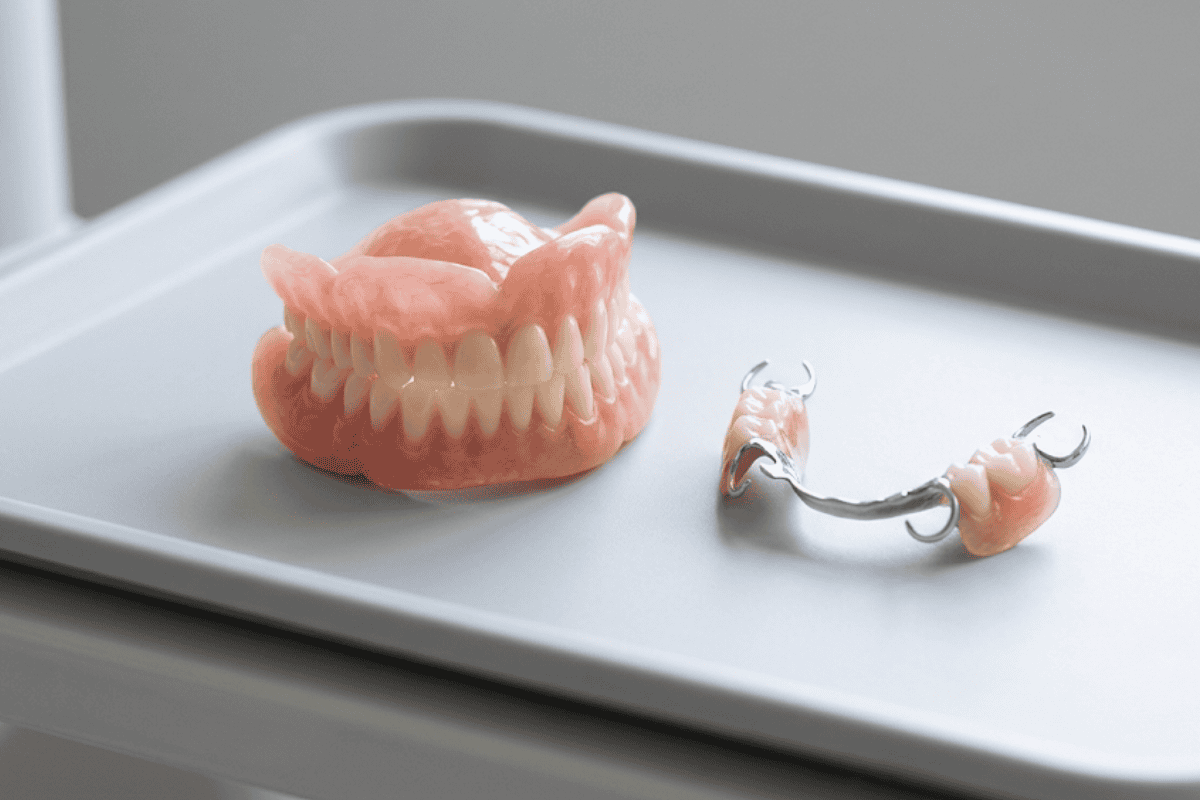
A full denture, sometimes called a complete denture, replaces an entire arch of teeth. That means every tooth on the top, the bottom, or both jaws is gone and gets replaced by a row of artificial teeth set into a gum-colored acrylic base. Dentists recommend a full denture when no healthy natural teeth remain in a jaw or when the remaining teeth need to be removed. You can review the different types of complete dentures, including conventional and immediate versions, through the Cleveland Clinic’s patient library.
A partial denture is built for a different scenario: you still have some healthy natural teeth, and you only need to fill the gaps. Replacement teeth sit on a pink base, usually over a lightweight metal or flexible framework, and the appliance clips into the spaces left by missing teeth. Our team walks patients through both full and dentures options during a single consultation so the choice is based on your actual bite, not guesswork.
How Each Type Stays in Place
This is where the two really diverge. A full denture rests directly on your gums and the underlying bone ridge, held by suction and a close custom fit. The upper denture usually grips better than the lower one because it covers more surface area across the palate, and many patients add a denture adhesive for extra hold. A partial, by contrast, uses small metal clasps or discreet precision attachments that hook around your existing natural teeth, so those teeth do part of the anchoring work. That single mechanical difference, gums versus remaining teeth, drives most of the day-to-day contrasts in comfort, cleaning, and fit. The American College of Prosthodontists explains how a prosthodontist designs each appliance around the support that is actually available in your mouth.
Comparing Full and Partial Dentures at a Glance
The table below lines up the core differences. Every figure here is also explained in the surrounding text, so nothing in it is a surprise.
| Feature | Full (Complete) Dentures | Partial Dentures |
|---|---|---|
| Best for | All teeth missing in an arch | Some natural teeth remaining |
| Teeth replaced | A full arch (upper, lower, or both) | One to several teeth |
| How it stays in place | Suction and fit on the gums and bone ridge, plus optional adhesive | Clasps or precision attachments anchored to remaining natural teeth |
| Typical cost (no insurance) | About $1,500 to $3,600 per set | About $1,300 to $4,200, depending on materials |
| Adjustment period | Weeks to months, with several fitting visits | Weeks to months, with several fitting visits |
| Lifespan | About 7 to 10 years | Roughly 5 to 7 years |
| Removable | Yes, take out nightly | Yes, take out nightly |
Cost, Lifespan, and Daily Care
Cost usually tracks with complexity. A conventional full set commonly falls between $1,500 and $3,600 without insurance, while partials range from roughly $1,300 to $4,200 depending on whether the frame is resin, flexible nylon, or cast metal. Neither number is a fixed quote, because materials, the number of teeth involved, and your insurance all move the total, so treat these as national ranges rather than a set price.
Longevity is similar for both but not identical. A full denture typically lasts about 7 to 10 years, and a partial roughly 5 to 7 years, before a reline or replacement is needed. The reason either one eventually loosens is that your jawbone slowly changes shape after teeth are gone, so a device that fit perfectly at first will need periodic adjusting.
Care is nearly the same for both appliances, and doing it right protects both your device and the tissue underneath. A few habits make the biggest difference:
- Rinse the denture after meals to clear trapped food.
- Brush it daily with a soft brush and a denture cleaner or mild soap, never abrasive regular toothpaste, following care guidance from Mayo Clinic.
- Soak it overnight in water or a cleaning solution, and keep it away from hot water and bleach.
- Take it out at night so your gums can rest.
Healthy gums matter just as much as a clean appliance, especially for partial wearers whose natural teeth do the anchoring, so it helps to know why your gums may bleed and how to calm the irritation. The University of Colorado School of Dentistry’s patient education from its dental university program is another plain-language resource on adjusting to complete and partial dentures.
Why Choose Your Olathe Dentist
A denture that fits well is made, not bought, and that is where our approach in Olathe stands out. Rather than handing you a finished appliance and sending you off, our dentists build in several in-person fitting visits at our Lone Elm Road office, checking sore spots, bite balance, and speech as the device settles. When your jaw shape shifts over the years and the fit loosens, we handle relines and repairs in-house instead of mailing your denture out, which keeps you eating and talking normally sooner. We also fit full and partial dentures under the same roof where we place implants and treat gum health, so if your plan later shifts toward an implant-supported option, your records and impressions are already here in Olathe, KS. For families in the Olathe and greater Kansas City area who feel nervous about tooth loss, that continuity and unhurried fitting process is the whole point.
Conclusion
The clearest way to decide is this rule of thumb: if an entire arch of teeth is gone, you are looking at a full denture, and if you still have healthy natural teeth to build around, a partial is usually the better and more affordable path. Expect a fitting process measured in weeks rather than a single visit, plan on a device that lasts several years before it needs a reline, and remember that the fit will drift as your jaw changes. Patients across Olathe, KS get the best results when they start with a professional evaluation instead of guessing which option they need. Call our team to schedule an exam and get a straight answer built around your mouth.
Ready to Rebuild Your Smile? Bring your questions and your current denture if you have one, and let us map out the right fit. Request your appointment online and we will find a time that works.
Frequently Asked Questions
What is the difference between full and partial dentures?
A full denture replaces every tooth in an arch and rests on your gums and bone ridge, while a partial denture replaces only some missing teeth and clips onto the natural teeth you still have. Full dentures are used when no healthy teeth remain in a jaw, and partials are used when some sound teeth are left to anchor the appliance.
Which is better, partial or full dentures?
Neither is universally better because they solve different problems. A partial is the right choice when you still have healthy natural teeth worth keeping, and a full denture is appropriate only when all the teeth in an arch are missing or must be removed. A dentist bases the recommendation on how many natural teeth remain and how healthy they are.
Can a partial denture be turned into a full denture?
A partial is not simply converted, but many people do transition from a partial to a full denture over time. If the natural teeth that once anchored the partial are eventually lost or removed, a new full denture is made for that arch. Your dentist plans the timing around the health of your remaining teeth.
How many teeth do you need for a partial denture versus a full denture?
A partial denture requires at least one or a few healthy natural teeth to clasp onto, and it can replace anywhere from one tooth to most of an arch. A full denture is used when zero natural teeth remain in that jaw, so it replaces the complete arch at once.
Are partial dentures cheaper than full dentures?
Partial dentures are often less expensive because they replace fewer teeth, but the price overlaps with full dentures once you factor in materials. A resin partial can cost less than a full set, while a cast metal partial can cost more, so the final number depends on the framework and the number of teeth being replaced rather than the category alone.

Sorry, the comment form is closed at this time.